How Much Does it Cost to Build a Saas Platform in 2025?
How much does it cost to build a SaaS platform in 2025? Here is a full cost breakdown and analysis. In 2025, building a SaaS platform can range from$980/month


Table of contents
These days, building a SaaS platform is not limited to just big corporations only because lean startups, small businesses, and even solo founders are joining the SaaS boom!
The market is growing fast, but so are the questions about cost. How much money does it really take to turn an idea into a working SaaS product? The truth is, there isn’t a single answer.
This is because costs depend on many things, like the size of your platform, the features you need, the team you hire, and the tools/stack you use. Some businesses spend tens of thousands while some invest hundreds of thousands.
We explain the real cost breakdown in this article, step by step. You’ll see where your money goes, what to expect at each stage, and how to save money without cutting corners.
This guide will give you a clear picture of what it costs to build SaaS in today’s world, either as a founder looking for an investor or a company planning a new product.
Key Factors That Affect SaaS Costs

When estimating SaaS costs in 2025, you must look beyond the surface. Expenses vary not just by the hours spent writing code but also by decisions made at every stage.
The more complex your product, the more resources you’ll need. Think about who will use your platform, what problem it solves, and how scalable it should be. Design style, choice of cloud providers, and level of automation also shape the bill.
Team structure is also another big factor, since hiring senior developers or specialized engineers costs more than a lean team of generalists.
Even after launch, updates, compliance requirements, and customer support influence ongoing costs. In short, every decision from design to hosting affects the final budget.
At RocketDevs, we often remind founders that team structure and talent location can make or break your budget.
Hiring senior developers in the U.S. may cost you $120-$150/hour, while a vetted developer from Africa with the same technical skill set may cost $30-$50/hour.
Multiply that difference across a 6-12 month project, and you’re looking at tens of thousands of savings without sacrificing quality.
Top Pick: Top 11 Platforms to Hire AI/ML Developers
How Much Does it Coast to Build a SaaS Platform? Average Cost Calculation in 2025
When estimating the average cost of SaaS development in 2025, it helps to think in ranges and scenarios rather than a single figure.
Costs vary depending on complexity, design quality, feature set, and the development team’s location.
A small MVP with basic features and lean design will sit on the lower end, while enterprise-grade platforms with advanced integrations, AI capabilities, and custom UI/UX demand far larger investments.
Budgeting also depends on whether you hire freelancers, agencies, or full-time staff, since hourly rates differ greatly across regions. With RocketDevs talent, here’s what founders typically spend.
- Basic SaaS MVP (lean, early stage): $5,000 - $10,000
- Mid-level SaaS (scalable, polished design): $20,000 - $40,000
- Enterprise SaaS (AI, custom dashboards, advanced security): $60,000 - $100,000+
Compare that with global averages of $40,000 - $300,000, and you can see why hiring through RocketDevs is a smart investment. The savings aren’t just in dollars but also in faster timelines and better alignment with startup budgets.
Now Compare Average SaaS Development Cost at RocketDevs
| Developer Level | Hourly Rate | Monthly Rate | Vetting Process | Talent Pass Tier | Best For |
|---|---|---|---|---|---|
| Associate Level Developer | $8/hr | $1,300/mo | Vetted for 4 hours in coding, debugging, and English communication | Top 10% (90% of applicants fail) | - Budget-friendly - Junior-level candidates - Fresh perspective & enthusiasm |
| Mid Senior Developer | $14/hr | $2,200/mo | Vetted for 6 hours in coding, debugging, project management, and communication | Top 8% (92% of applicants fail) | - Proven track record in complex projects - Can work independently without coaching - Strong experience in troubleshooting |
| Senior Developer | $23/hr | $3,600/mo | Vetted for 8 hours in coding, debugging, project management, communication, and architecture | Top 5% (95% of applicants fail) | - Extensive technical experience & leadership - Scalable architecture design for thousands of users - Stakeholder management & team mentorship |
At RocketDevs, you get top-tier SaaS development talent at a fraction of Silicon Valley costs—flexible, vetted, and ready to scale your product.
Cost Breakdown by Stages
1. Planning and Research
Every SaaS begins with market research and planning. This stage includes defining your target audience, studying competitors, validating your idea, and mapping a business model. A strong plan prevents costly mistakes later.
2. UI/UX Design
Good design attracts and retains users. It involves user journeys, wireframes, interactive prototypes, and polished final screens. A strong design team ensures your product feels simple and intuitive, which lowers churn and improves adoption. Costs increase if you need custom branding, mobile and web design.
3. Core Development
This is the largest cost section. It includes building the backend (servers, APIs, database), the frontend (user-facing interface), and all integrations. Security, scalability, and the performance are also coded here. Advanced features like machine learning or real-time processing raise expenses further.
4. Infrastructure and Hosting
Cloud services like AWS, Google Cloud, or Azure power SaaS apps. Costs include server hosting, storage, databases, load balancers, and monitoring tools. As usage grows, costs scale too. Planning cloud architecture carefully reduces overspending.
5. Testing and QA
Bug-free apps save money in the long term. Testing covers functional testing, usability testing, load testing, and security audits. Automated test frameworks also add upfront cost but reduce errors later. A reliable QA process ensures smooth user experience at launch.
6. Launch and Marketing
Launching is more than just deploying code. You need campaigns to attract first users like content marketing, SEO, paid ads, influencer partnerships, and PR. A good launch plan ensures that you don’t build in silence. Costs vary depending on how aggressively you want to grow from day one.
7. Ongoing Maintenance
SaaS products evolve constantly and as such, regular updates, security patches, feature improvements, and scaling infrastructure are essential. You also need customer support teams to handle feedback and resolve issues. Maintenance is an ongoing investment that keeps your platform competitive.
For You: The Best 9 Platforms to Find Expert Shopify Developers
Key Features That Increase Costs

When you are planning your SaaS budget, it’s important to understand that some features significantly drive up expenses.
These expenses are not just nice-to-have add ons, they often involve complex development, third-party services, or ongoing operational costs.
Here’s a closer look at the most common ones and why they impact pricing:
- User Authentication and Role Management - Basic login is cheap, but secure authentication with multi-factor login, social sign-ons (Google, LinkedIn, GitHub), and role-based access control requires more backend engineering and robust security measures.
- Subscription Billing Systems - Building a billing engine that handles free trials, recurring payments, upgrades, downgrades, refunds, invoicing, and multiple currencies is highly complex. Many startups integrate with Stripe, Paddle, or Chargebee, but even with these, customization and compliance (like tax handling) add costs.
- Data Encryption and Security Compliance - Strong encryption, GDPR compliance, SOC 2 audits, or HIPAA readiness are not optional for sensitive industries. Security layers, monitoring tools, and compliance checks require extra development hours and sometimes dedicated specialists.
- AI-Powered Features - Integrating machine learning models, NLP, or recommendation engines increases both development cost and infrastructure usage. Training or fine-tuning models requires data scientists, while running AI workloads adds higher cloud expenses.
- Third-Party Integrations - Connecting your SaaS with external tools (CRMs, payment gateways, email providers, cloud storage) adds complexity because each integration requires API management, testing, and ongoing maintenance when external APIs update or break.
- Analytics Dashboards - Building real time dashboards with charts, KPIs, and custom reports is resource-intensive. Beyond UI, it involves setting up data pipelines, warehouses, and querying systems to ensure accuracy and scalability.
- Collaboration Features - Chat, notifications, shared workspaces, or multi-user editing features add significant backend load and real-time data processing requirements
In short, the more advanced and business-critical the feature, the higher the cost of development and maintenance. Founders should prioritize features based on user needs and business goals to avoid
SaaS Team Cost in 2025
Building a SaaS platform is more than just about features and design, it also involves the behind behind the code.
The teams you hire directly affects both your budget and the final quality of the product. A strong team typically includes:
- Project Managers - They coordinate tasks, manage timelines, and ensure smooth communication.
- Developers - Both front-end and back-end developers build the platform’s core functionality.
- UI/UX Designers - They shape the product’s look and usability, ensuring users have a smooth experience.
- QA Testers - They check for bugs, security gaps, and performance issues before launch.
Developer Rates by Region
United States & United Kingdom - $80 to $150 per hour. You pay a premium, but you get teams experienced with enterprise-grade projects and complex compliance needs.
- Eastern Europe - $40 to $80 per hour. Countries like Poland, Ukraine, and Romania are known for strong technical talent with more competitive rates.
- Africa & Asia - $10 to $50 per hour. Markets like Nigeria, Kenya, India, and the Philippines are rising fast, offering skilled developers at affordable rates.
That last figure is why RocketDevs exist. We connect founders with pre-vetted African developers who deliver Silicon Valley quality at startup-friendly prices.
Related: Top 13 Platforms to Find a Technical Co-founder
Why Location Matters
Where you hire from shapes not only your cost but also your team’s working culture and flexibility.
While Western developers bring experience with large scale projects, emerging markets often provide more agile and cost-effective talent pools.
Cost Saving Tips
Cutting SaaS doesn’t have to mean sacrificing quality. The smartest founders focus on efficiency and strategy from day one.
Here are some practical ways that we’ve carefully curated to save money while still building a great product
- Start with an MVP - Instead of building every feature at once, launch a Minimum Viable Product. This approach would allow you to reduce upfront costs and lets you test if people will actually pay for your solution before scaling.
- Use Open-Source Tools – Frameworks, libraries, and cloud-native tools can replace expensive proprietary software. From authentication to analytics, open-source saves both money and development time.
- Outsource to Skilled Remote Teams – Instead of paying premium Western rates, hire vetted developers from emerging markets. Platforms like RocketDevs help you find high-quality engineers at more affordable rates.
- Automate Testing and Deployments – Manual testing and deployments waste hours. Automation tools ensure faster delivery, fewer bugs, and lower long-term costs.
- Scale Features Gradually – Don’t build every “nice-to-have” feature upfront. Roll out only what customers demand. This avoids overspending on unused functionality.
How RocketDevs Helps
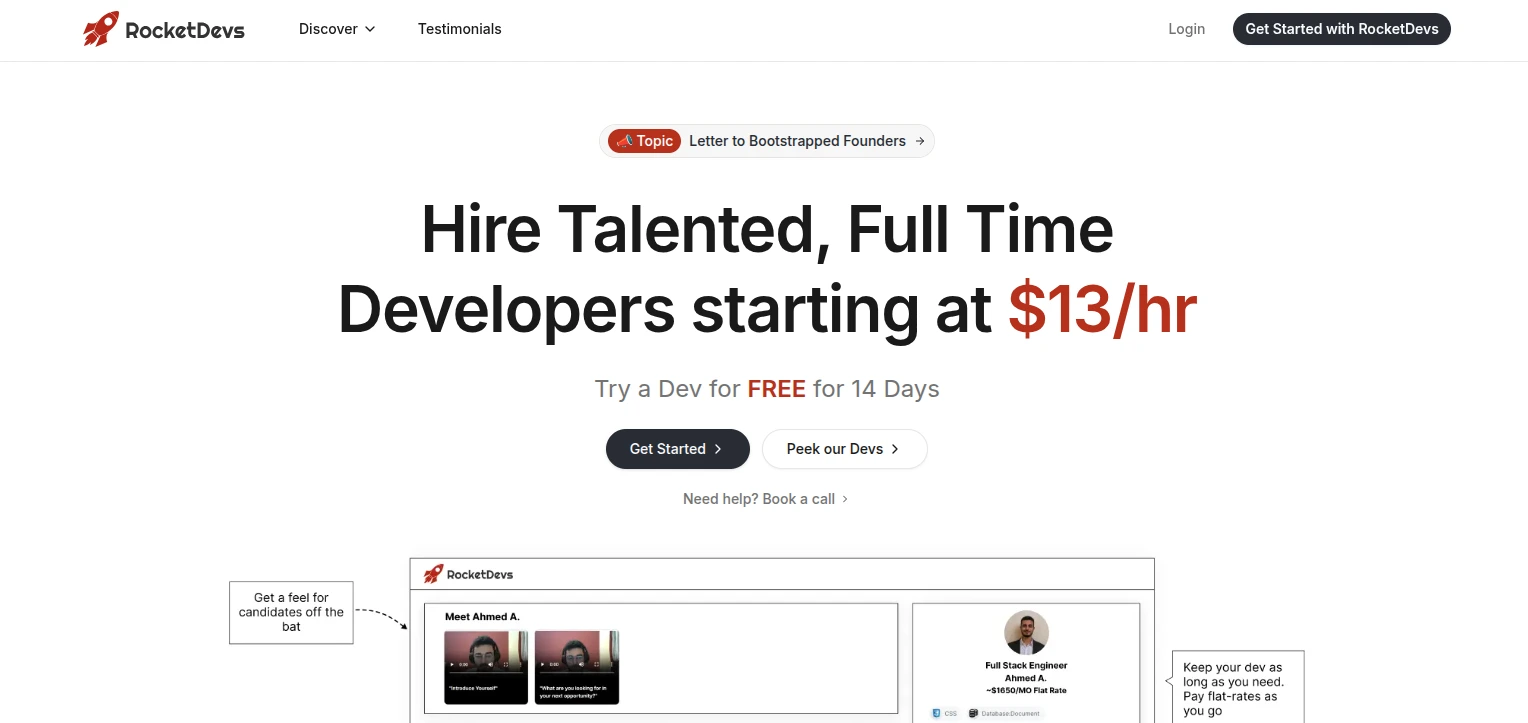
Cost will always be a concern, but the real question for founders is, “how do you invest wisely without draining your runway?”
That’s where RocketDevs comes in. We understand that every dollar counts, especially in the early days of a SaaS startup.
Instead of overspending on inflated rates or wasting months searching for the right talent, we connect you directly with skilled, pre-vetted developers from emerging markets like Africa who deliver world-class quality at 40-60% lower costs than U.S. or European teams.
These are engineers who not only bring technical expertise but also hunger to help founders like you build sustainable, scalable brands.
So, if you’re serious about launching your SaaS idea without burning through your budget, let RocketDevs help you find the right team to make it real. The smartest investment you can make isn’t just in your platform but in the people who bring it to life.

Written by
Collins Okolo
Writer
Meet Collins Okolo! He's a creative writer and digital marketing enthusiast. Collins has been around the block when it comes to creating content for both social media and websites. What sets Collins apart is his storytelling ability and his uncanny knack of using his storytelling to tap into what makes people tick, no matter who they are. You can tell he lives for this stuff!
More from our blog
Continue exploring insights and stories from RocketDevs