11 AI Automation Tools to Build Awesome LLM Apps (2025)
Want to build awesome LLM Apps but don't know which to pick from or where to start? Here are the top 11 AI automation tools to build awesome LLM apps based on use


Table of contents
When I wanted to start building with large language models (LLMs), I was excited, but also completely overwhelmed.
I had big ideas: AI chatbots that could hold natural conversations, tools that could summarize documents in seconds, and apps that could personalize user experiences like magic.
But connecting the dots between an LLM and a real, working product? That’s where the challenges began. Where can I find the best AI automation tools to build awesome LLM apps?
From orchestration to memory management to data pipelines, I quickly realized that building LLM-powered apps is more than just prompting ChatGPT, it’s about automation, scalability, and choosing the right tools.
Over time (and after more debugging sessions than I care to admit), I discovered a set of platforms and tools that made the process faster, smarter, and, frankly, a lot more enjoyable.
In this article, I’ll share the top AI automation tools that have helped me, and many others build powerful, production-ready LLM apps.
Top 11 AI Automation Tools to Build LLM Apps
- LangChain
- LlamaIndex
- AutoGen by Microsoft
- OpenDevin
- PromptLayer
- SuperAgent
- Vercel AI SDK
- Flowise
- Dust
- Crew AI
- AgentOps
1. LangChain
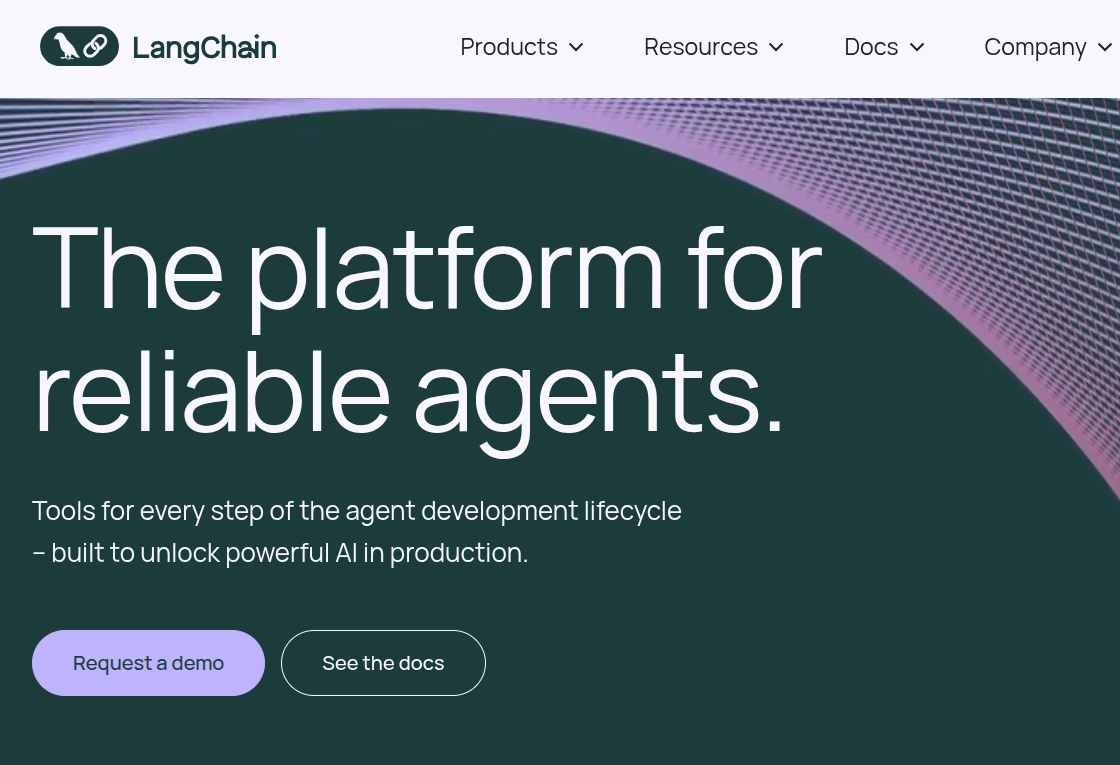
LangChain is one of the most popular frameworks for building applications powered by large language models (LLMs). It helps developers connect LLMs with other tools like APIs, databases, and custom functions, making it easier to build smarter, more useful AI apps.
One of the main strengths of LangChain is its flexibility. You can use it to build advanced chatbots, personal AI assistants, question-answering systems, and even tools that can search documents or websites and summarize information.
For example, a company can use LangChain to create a chatbot that answers customer support questions by pulling answers from a knowledge base.
Best for: LangChain is especially useful when you need your AI app to do more than just respond to text, like call APIs, interact with files, or chain multiple LLM calls together in a workflow.
2. LlamaIndex
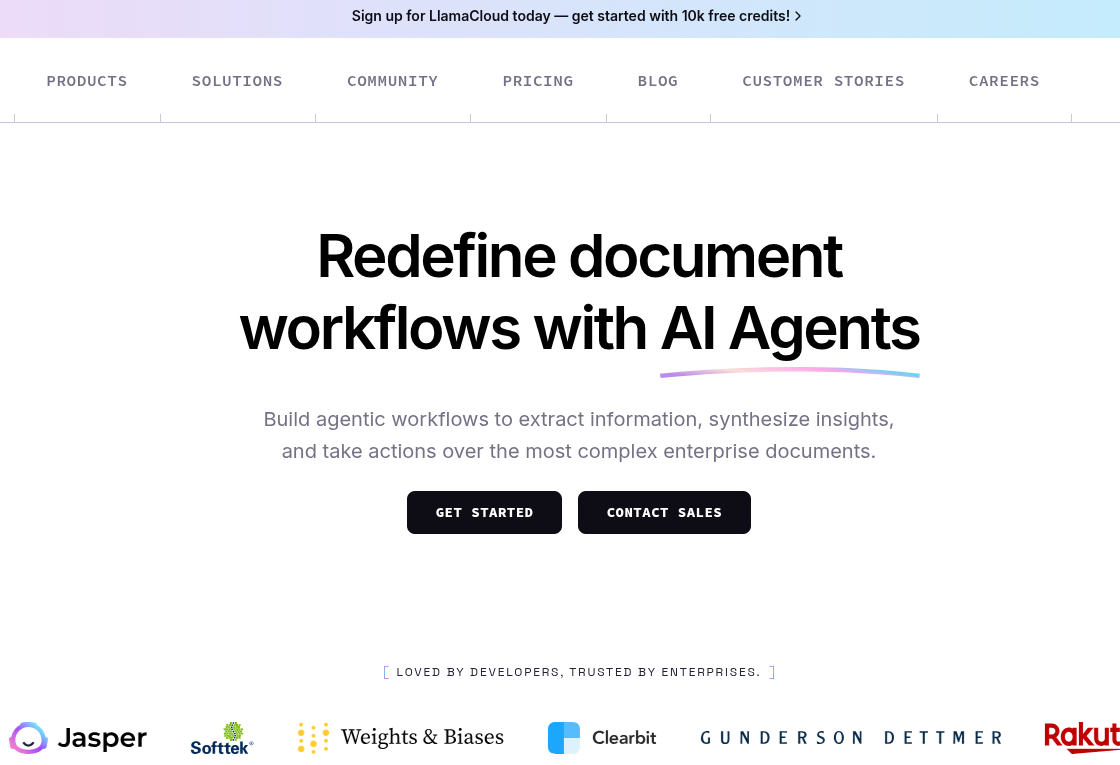
LlamaIndex is one of the powerful AI automation tools to build LLM apps. It helps you connect large language models to your own data. It makes it easy to load, organize, and search through documents, so your AI app can give better, more accurate answers based on custom information.
Developers often use LlamaIndex to build things like document search apps, internal knowledge tools for teams, or chatbots that understand company data. For example, you can use it to create an AI assistant that answers questions using your PDFs, Notion pages, or Google Docs.
Best for: LlamaIndex is great for anyone who wants to make LLM apps smarter by giving them access to private or specialized data.
Related: Top 9 AI App Development Companies
3. AutoGen by Microsoft
AutoGen by Microsoft is a tool that helps developers build multi-agent AI systems. Instead of just using one AI model to do everything, AutoGen makes it easy to set up different AI agents that can talk to each other, share tasks, and solve problems as a team.
It’s best used for building advanced AI workflows like research assistants, AI coding agents, or task managers that need to think through complex steps.
For example, you could have one agent that plans a task, another that writes the code, and a third that reviews the result, all powered by LLMs. When several agents write code at once, it helps to understand what happens when AI agents over-produce code.
Best for: AutoGen is especially useful when your app needs coordination between multiple intelligent parts to get things done efficiently.
4. OpenDevin
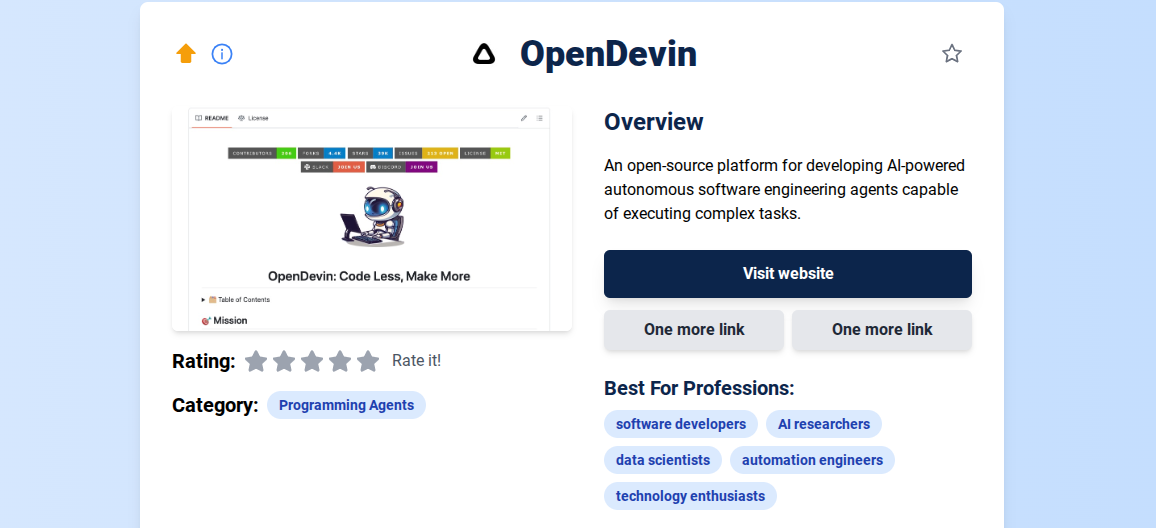
OpenDevin is an open source project designed to build fully autonomous AI agents that can write and run code by themselves. It gives you a ready to use workspace where an AI agent can plan, take actions, and execute commands just like a human developer.
It’s best used for building coding assistants, devops agents, or tools that can handle software tasks without needing constant human input.
For example, you can create an agent that reads a GitHub issue, writes the code to fix it, tests it, and even commits the changes. That level of autonomy is exactly where AI agents need human guardrails.
Best for: OpenDevin is one of the best AI automation tools to build LLM apps for developers looking to automate technical work using LLMs in a more hands-off and efficient way.
5. PromptLayer
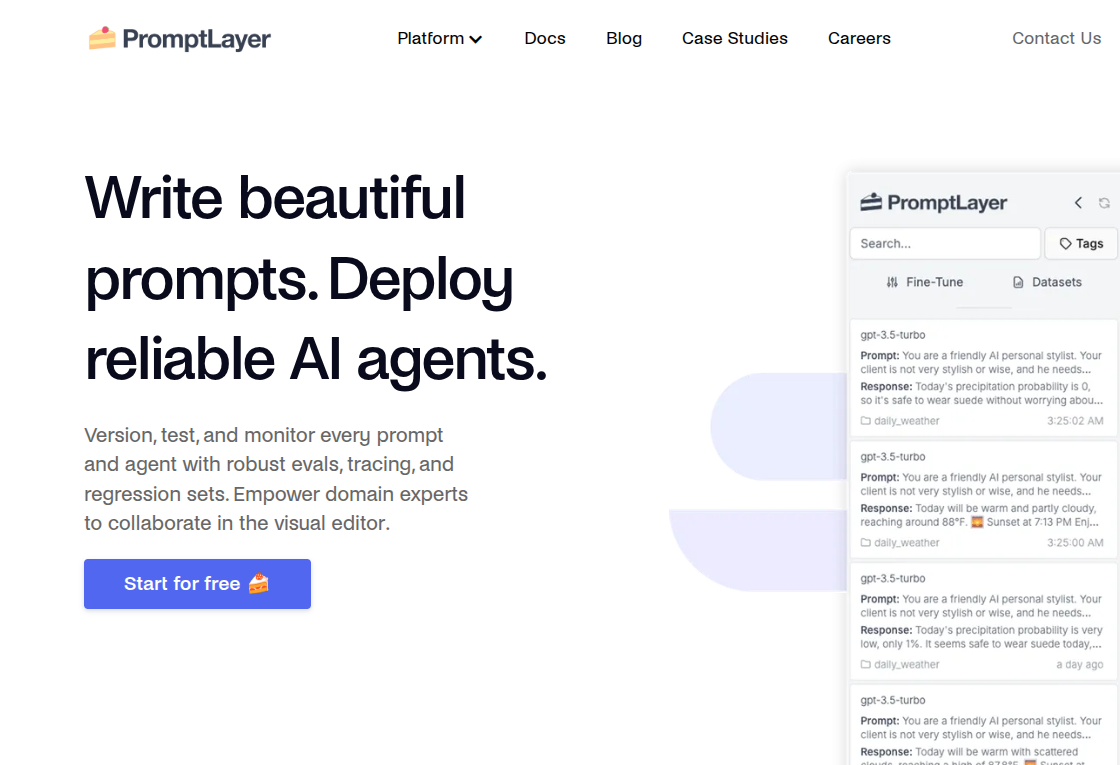
PromptLayer is a helpful tool that lets you track and manage every prompt you send to a large language model.
It works like a version control system for your prompts so you can see what’s working, test new ideas, and improve your app’s performance over time.
Developers often use PromptLayer when building chatbots, writing tools, or any LLM app where prompt quality matters.
For example, if you’re building a customer service bot and want to test which prompt gives better answers, PromptLayer helps you compare and choose the best one.
Best for: PromptLayer is great for making your LLM apps more reliable by giving you full visibility into how prompts are used and how well they perform.
6. SuperAgent
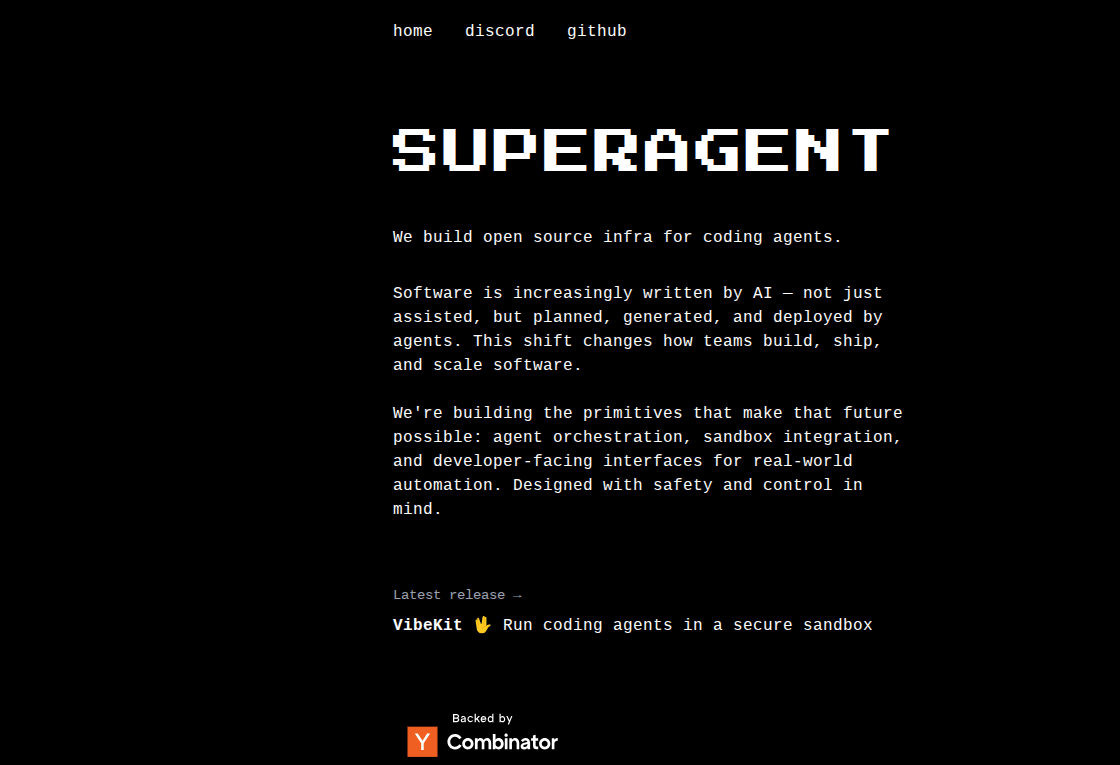
SuperAgent is an open source framework that helps you build and deploy AI agents quickly.
It comes with built-in tools for memory, file handling, APIs, and even scheduling, so you can focus on the logic of your app without starting from scratch.
SuperAgent makes it easy to launch useful AI tools that act more like helpful teammates than just simple chatbots.
Best for: It’s best used for creating virtual assistants, automation bots, or tools that perform tasks on your behalf. For example, you can build an agent that reads emails, summarizes them, and sends smart replies, all powered by large language models.
You Might Like: The Best 15 AI Productivity Tools
7. Vercel AI SDK
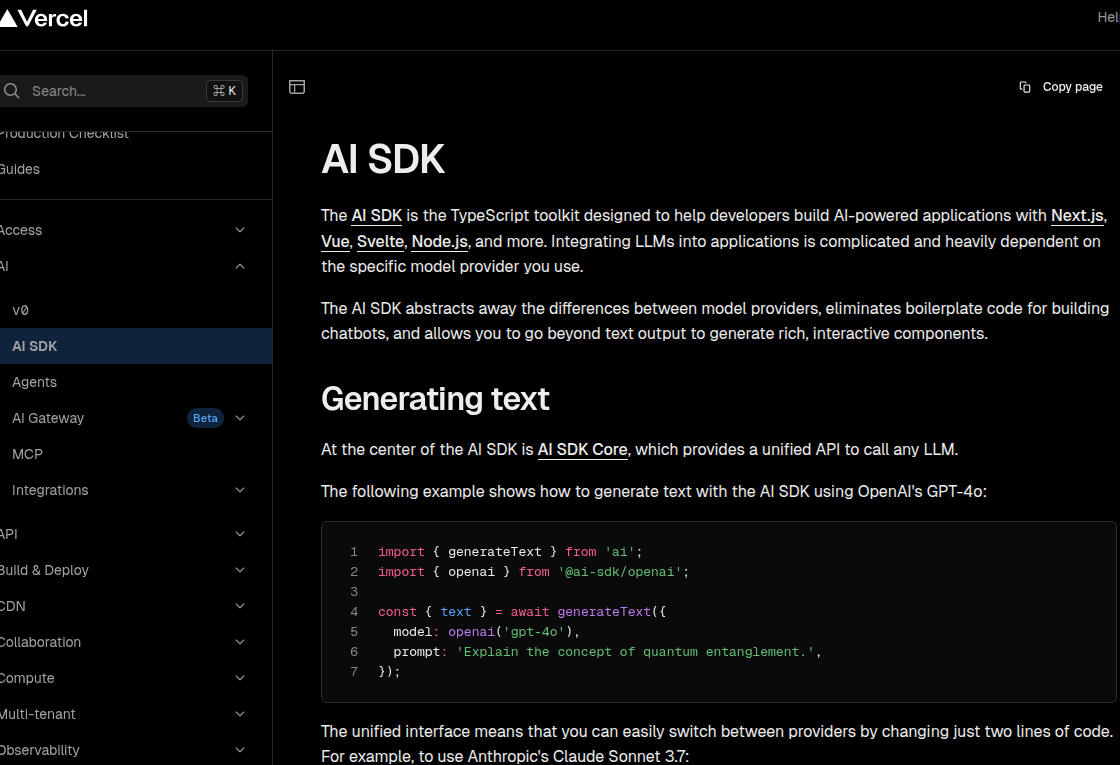
Vercel AI SDK is a developer toolkit for building LLM apps with fast, real-time responses. It works especially well with popular frontend frameworks like Next.js and React, making it easy to create smooth chat interfaces powered by large language models.
It’s one of the best AI automation tools to build awesome LLM apps. Vercel is used for building AI chatbots, writing tools, or voice assistants with streaming output so users don’t have to wait for full responses.
For example, you can use it to build a customer support chat that types out answers as they’re generated.
Best for: Vercel AI SDK is perfect for developers who want to combine powerful LLM features with a modern user experience.
8. Flowise
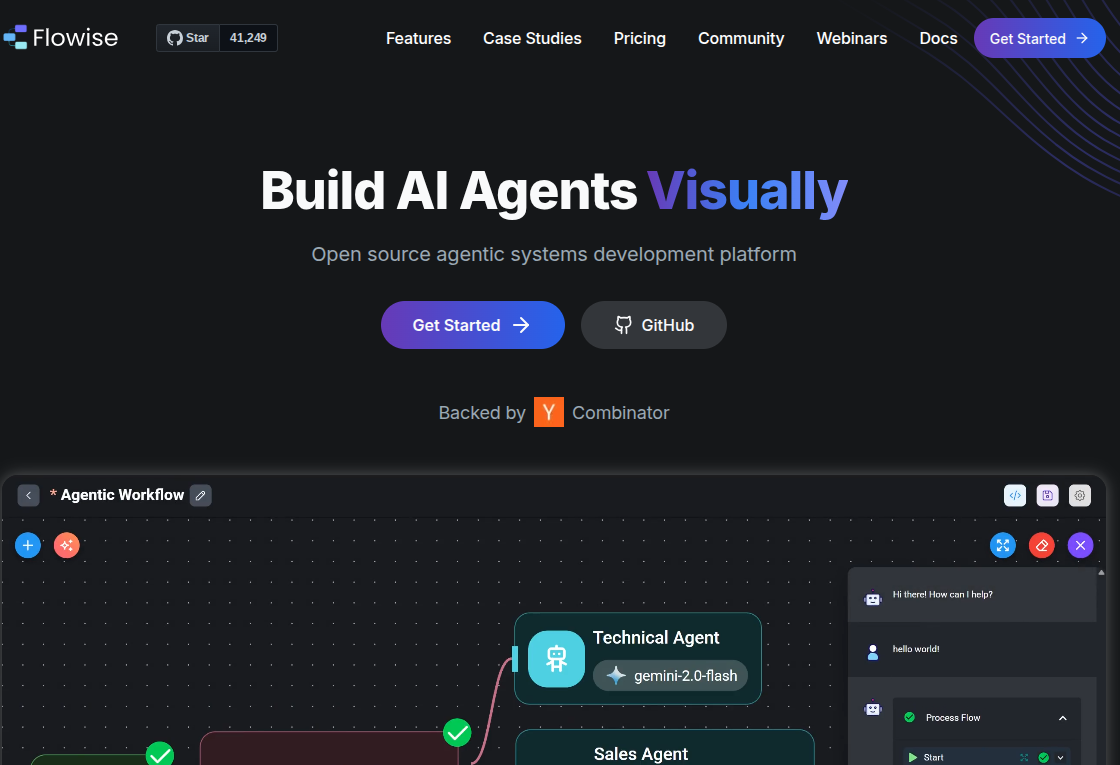
Flowise is a low code tool that lets you build LLM apps using a visual drag and drop interface. It’s built on top of LangChain, so you get powerful features without needing to write a lot of code.
It’s best used for creating chatbots, automation tools, or AI workflows by connecting blocks like prompts, tools, and memory. For example, you can build a customer support assistant that pulls from a knowledge base and responds in real time, all by designing it visually.
Best for: Flowise is great for teams who want to prototype and launch LLM apps quickly without deep technical skills.
9. OpenAI
OpenAI is one of the most powerful AI tools to build cutting-edge LLM apps. It provides API access to models like GPT-4 and GPT-4o, which can understand and generate human-like text, process images, and even interact with tools and external APIs.
With its developer-friendly platform, you can create intelligent agents, chatbots, and other AI-driven apps quickly and at scale.
It’s best used for building applications that need deep language understanding, such as AI assistants, content generators, customer support bots, and custom LLM workflows.
For example, you can use OpenAI to build an app that answers complex questions, summarizes documents, or even performs actions like sending emails or analyzing code.
Best for: OpenAI is a top choice if you want to build robust, reliable LLM apps with access to state-of-the-art AI capabilities and flexible APIs.
10. CrewAI
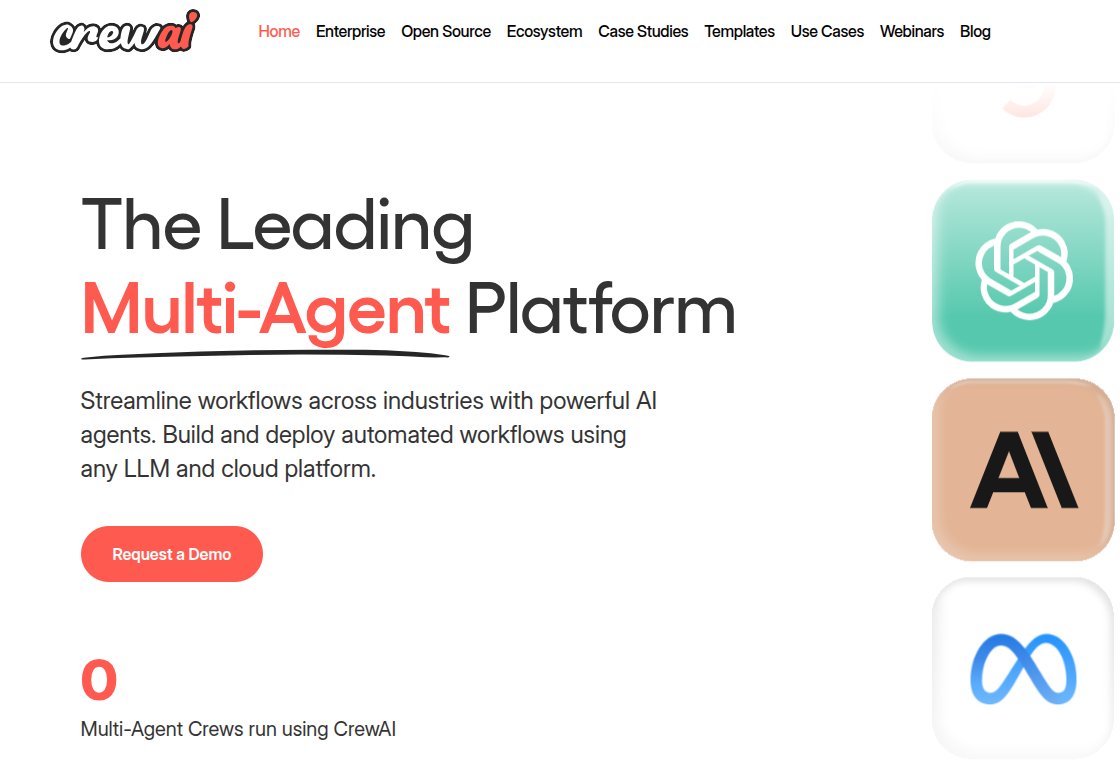
CrewAI is a framework that helps you build teams of AI agents that can collaborate to complete complex tasks. Each agent has its own role and skill, and you can assign responsibilities to them just like you would with real team members.
It’s best used for projects that require multiple steps or decision making. For example, you can build an AI research team where one agent searches for data, another analyzes it, and another writes a summary.
Best for: CrewAI is great when you want to simulate teamwork and build LLM apps that solve problems through agent collaboration.
11. AgentOps
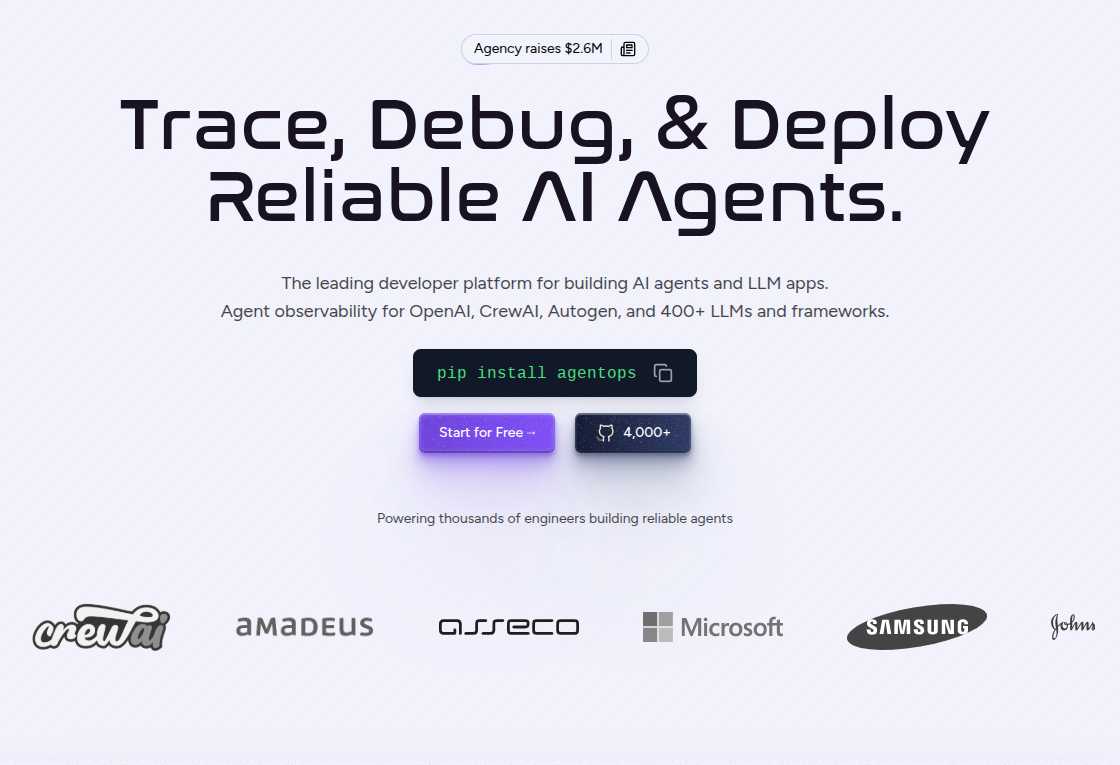
AgentOps is a platform for monitoring and managing AI agents in production. It tracks your agents’ actions, logs their behavior, and helps you improve performance with real time feedback.
It’s best used when you have LLM apps running in the wild and need to keep them reliable. For example, if you’ve deployed a customer support agent, AgentOps helps you understand how it’s responding, what it’s doing, and where it needs improvement.
Best for: AgentOps is perfect for developers who want to go from building agents to maintaining them in a stable and scalable way.
Top Pick: The Best 21 AI Tools for Product Managers
Comparing the Top AI Automation Tools to Build Awesome LLM Apps
| Tool | Key Features | Best Used For | Open Source / Free | Integration Support | Primary Programming Language |
|---|---|---|---|---|---|
| LangChain | Connects LLMs with APIs, workflows | Chatbots, assistants, document search | Yes | APIs, databases, custom tools | Python |
| LlamaIndex | Data ingestion and indexing | Document search, knowledge bases | Yes | PDFs, Notion, Google Docs, databases | Python |
| AutoGen | Multi-agent AI workflows | Coordinated AI tasks, coding assistants | Yes | Multi-agent communication | Python |
| OpenDevin | Autonomous AI coding agents | Coding automation, devops agents | Yes | GitHub, code execution environments | Python |
| PromptLayer | Prompt tracking and management | Prompt optimization, chatbot tuning | Yes | Any LLM platform via API | Python |
| SuperAgent | AI agents with memory and file tools | Virtual assistants, automation bots | Yes | Files, APIs, scheduling | JavaScript / TypeScript |
| Vercel AI SDK | Fast, streaming AI responses | Real-time chatbots, writing tools | Yes | Next.js, React, frontend frameworks | JavaScript / TypeScript |
| Flowise | Low-code visual builder for LangChain | Chatbots, AI workflows with drag and drop | Yes | LangChain components | JavaScript / Node.js |
| Dustin | AI agents with memory and planning | Personal assistants, workflow automation | Yes | Tool integrations, memory modules | Python |
| CrewAI | Multi-agent collaboration framework | AI teams for research, multi-step problem solving | Yes | Multi-agent setups | Python |
| AgentOps | Monitoring and managing AI agents | Production agent monitoring and improvement | Yes | Real-time logs, dashboards | Python |
How to Choose the Right AI Automation Tool to Build LLM Apps for Your AI Stack
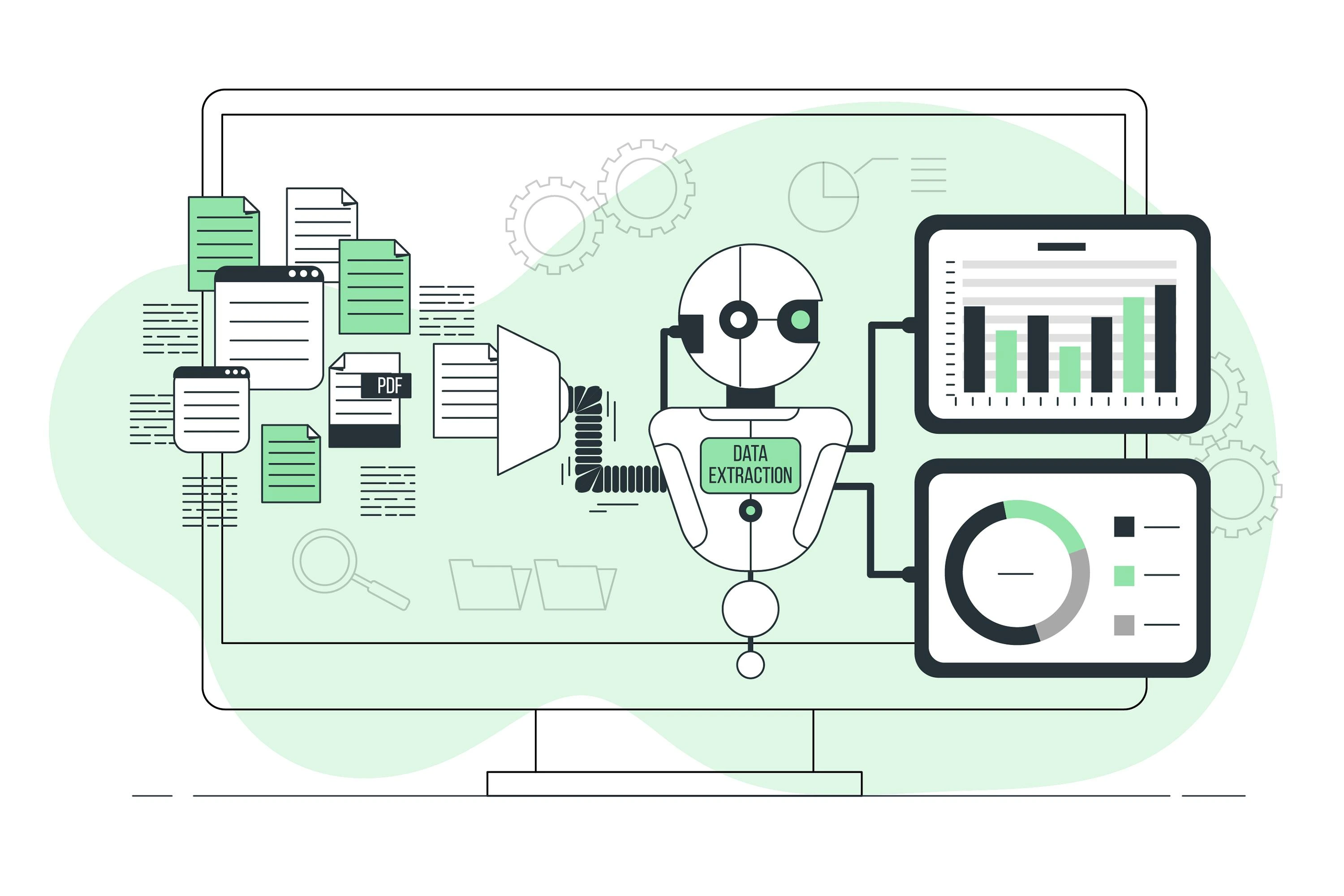
Okay, so you’ve seen the tools, but how do you actually choose the ones that make sense to you?
The truth is, there’s no one-size-fits-all stack. The best tools depend on what you’re building, your current setup, and how big your team is. Let’s break it down:
What are you building?
- Chatbots or AI Assistants? Tools like LangChain, Flowise, or SuperAgent are great for building conversational experiences with memory, tools, and context switching.
- Searching over your own data (RAG)? You’ll want LlamaIndex or LangChain to connect your LLM to files, databases, or web content.
- Internal AI tools for your team? Check out Dust, it’s designed for building secure, internal apps powered by LLMs, without having to reinvent the wheel.
- Autonomous agents or AI workers? Look at AutoGen, OpenDevin, or even SuperAgent if you want multiple agents collaborating or working independently.
What’s your tech stack?
- Frontend-focused (React/Next.js): Vercel AI SDK makes building beautiful, fast LLM apps super easy.
- Backend-heavy (Python, APIs, cloud): You’ll feel right at home with LangChain, LlamaIndex, and AutoGen.
- No-code or low-code preference?: Try Flowise: drag, drop, and build with minimal code.
Team size and experience
Solo dev or small team: Stick with tools that are easy to set up and have great docs—LangChain, PromptLayer, Flowise, or Vercel AI SDK are solid picks.
Larger teams or enterprise use: Tools like Dust, PromptLayer, and AutoGen offer more control, tracking, and collaboration features to work at scale.
Start small, test quickly, and don’t be afraid to mix and match. Most of these tools play well together.
For You: How to Build AI MVP in 30 Days (Or Less)
Next Steps: Building Smarter, Not Harder
The world of LLM app development is moving fast, and with the right tools, you can move even faster. Whether you’re building an intelligent chatbot, an AI co-pilot, or a custom internal tool, automation is the key to scaling without burning out. This article has elaborated on the best AI automation tools to build awesome LLM apps.
Tools like LangChain, LlamaIndex, and AutoGen are more than just buzz, they’re how real teams are shipping real products today.
But let’s be honest: even with the best tools, building LLM apps isn’t always plug-and-play. It takes time, experimentation, and a good grasp of both AI and software architecture to get things right.
If you’re serious about building with LLMs but don’t want to go it alone, consider hiring expert developers who’ve done it before. At RocketDevs, we connect you with pre-vetted AI and automation engineers who can help you go from idea to production, without wasting months trying to figure it all out yourself.
So build smart. Automate the boring stuff. And don’t be afraid to bring in reinforcements when you need them. The future of AI isn’t just about tools, it’s about the people who know how to use them.
Let’s build it together.

Written by
Olayiide Bolaji-Daniel
Senior SEO Specialist
Bolaji is a Senior SEO Specialist & Editor with over 5 years of experience.
More from our blog
Continue exploring insights and stories from RocketDevs