Frontend Developer Portfolios: 5 Common Styles and How Employers Should Evaluate Them
Frontend developer portfolios: 5 real examples plus an employer’s checklist to help you hire smarter, faster, and with confidence.


Table of contents
Table of Contents
- What Employers Should Look For in a Frontend Portfolio
- Employer’s Checklist: How to Evaluate Portfolios Quickly
- 5 Frontend Developer Portfolios Employers Can Learn From
- 6 Red Flags That Signal Weak Candidates
- How to Use Portfolios in Your Hiring Funnel
- Smarter Hiring Without Guesswork
- Frequently Asked Questions
Hiring the right frontend developer can make or break a startup. The right hire keeps your Project or MVP on track, makes your product look professional, and helps your users stick around.
The wrong hire? Deadlines slip, product quality drops, and costs pile up fast. The numbers tell the story. According to SHRM, a bad hire can cost up to 30% of a first-year salary.
In startups, that can easily top $240,000 once you factor in lost productivity and rehiring expenses. That’s money and time no founder can afford to lose.
And here’s the bigger shift: more companies are dropping degree requirements and focusing on skills. LinkedIn’s Future of Recruiting 2024 found a 36% jump in job posts that no longer require a degree.
For hiring managers, that means portfolios have become the clearest way to see real ability before making a decision.
This guide helps you cut through the noise. You’ll learn what frontend developer portfolios really reveal about a candidate and walk away with a clear checklist to make faster, more confident hiring decisions
Related: Frontend vs Backend - Key Differences to Know
What Employers Should Look For in a Frontend Developer Portfolio
A frontend developer’s portfolio isn’t always a flashy personal website. Sometimes it’s a GitHub page filled with project code, a Behance showcase, or even a Notion document walking through case studies.
The format doesn’t matter. What matters is whether the portfolio gives you a clear picture of the developer’s skills, creativity, and ability to deliver real work.
1. Easy, Professional Design
First impressions matter. A good frontend developer portfolio should be clean, professional, and easy to use on both desktop and mobile.
Today, over half of web traffic comes from mobile devices, so if the portfolio looks broken or confusing on a phone, it’s a red flag.
What this tells you:the developer understands user experience and can build products that keep customers engaged.
2. Speed and Performance
Every second counts online. Research shows that slow sites lose users fast, even a one-second delay can hurt engagement and sales.
If a portfolio loads quickly, it’s a signal the developer knows how to build products that won’t frustrate your customers.
What this tells you:the developer values efficiency, which translates to happier users and better conversion rates.
3. Accessibility
Websites need to work for everyone. In 2024 alone, over 4,000 lawsuits were filed in the U.S. for digital accessibility issues. A portfolio that works well with keyboard navigation, uses clear text, and includes captions or alt-text shows that the developer builds products with all users in mind.
What this tells you:they reduce legal risk and help you reach a wider audience.
4. Real Work and Case Studies
Screenshots are not enough. The strongest portfolios include real projects and short case studies explaining the challenge, the developer’s role, and the outcome. For example, “improved checkout process” or “reduced page load time.”
What this tells you:the developer ties their work to business results, not just design aesthetics.
5. Proof of Skills and Reliability
A great portfolio often links to live projects or code samples. The presence of these links shows transparency. You can also check if projects look maintained and updated, stale or broken links suggest a lack of follow-through.
What this tells you:the developer can be trusted to deliver and maintain what they build.
Employer’s Checklist: How to Evaluate Portfolios Quickly
When reviewing a frontend developer’s portfolio, ask:
- Is the site mobile-responsive and functional on different devices?
- Does the portfolio include GitHub/code links for validation?
- Are there case studies or clear explanations of the developer’s role?
- Are live demos available and working?
- Is attention to detail evident (no broken links, typos, or outdated projects)?
If you can check most of these boxes, you’re looking at a portfolio worth moving forward with in your hiring process.
Related:How to Build A Tech Team for a Startup in 7 Days
5 Frontend Developer Portfolios Employers Can Learn From
When you’re hiring a frontend developer, portfolios come in all shapes and sizes. Some are sleek personal websites, others are simple GitHub pages, and a few are just case studies written in Notion.
The format matters less than the signals you can pull from them.
Here are five common portfolio styles you’ll encounter and what they reveal about a candidate.
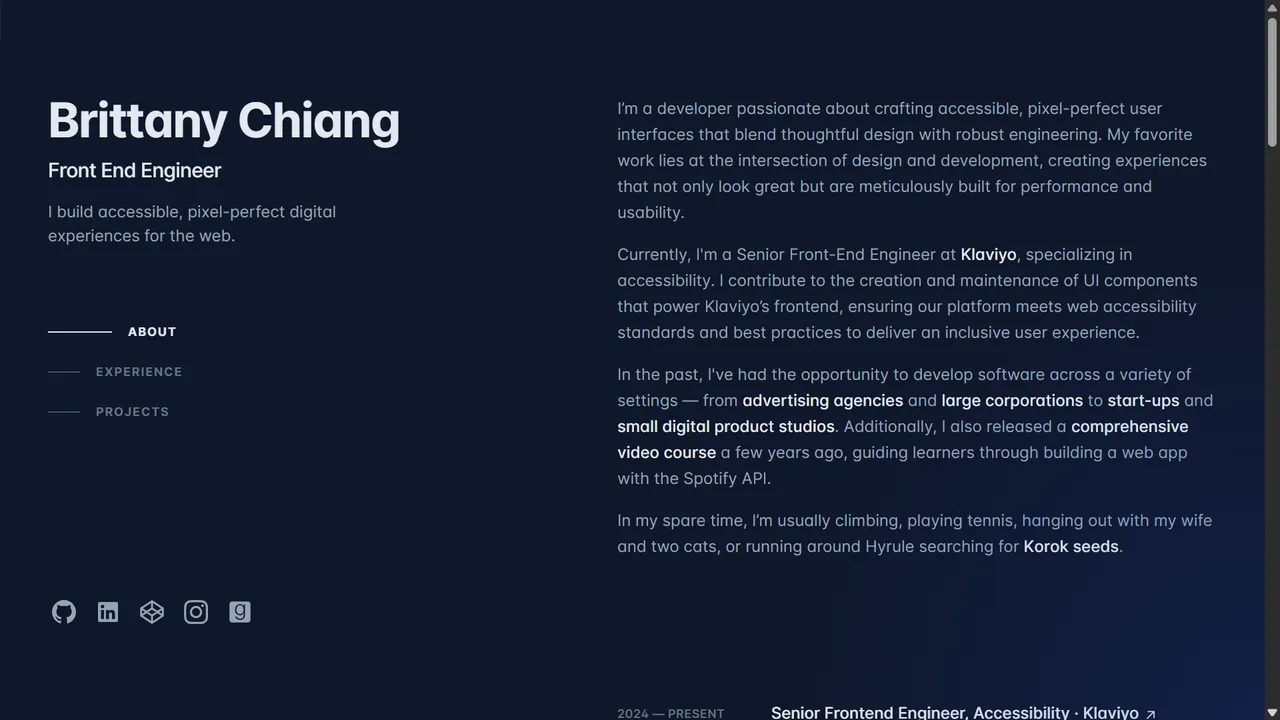
1. The Polished Personal Website
Credit: Brittany Chiang]
A personal website portfolio looks sleek, with clear navigation, branded visuals, and links to real projects.
Many examples highlighted in curated showcases present live product demos alongside a short introduction to the developer.
Strengths
- Shows ownership end-to-end: from design through to delivery.
- Demonstrates attention to detail and user experience, which is critical for products that must impress customers from day one.
- Often includes storytelling, where the developer explains not just what they built, but why.
Hiring Takeaway
This type of portfolio is strong when you need a developer who can create polished, user-facing features quickly.
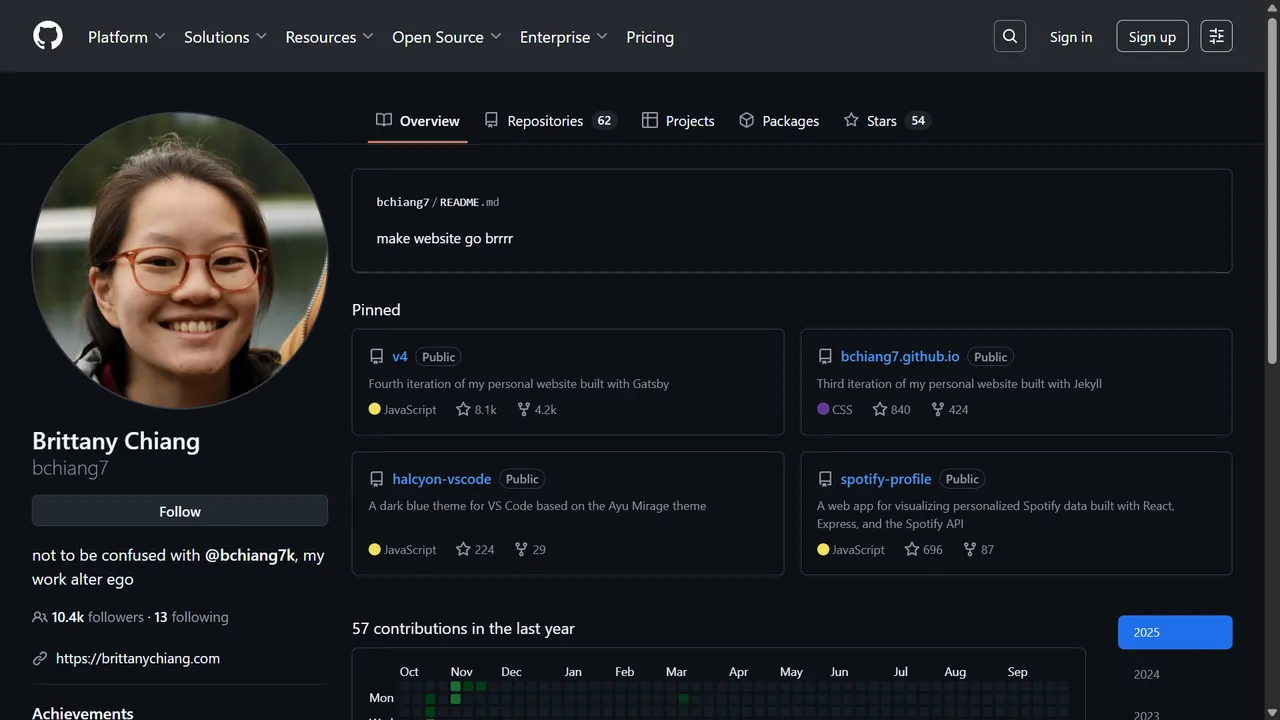
2. GitHub-Heavy Portfolio
Credit:Brittany Chiang / GitHub]
Some developers skip flashy websites and showcase their work directly on GitHub. Their portfolio might be a pinned set of repositories, each with a README explaining the project.
This style emphasizes transparency and technical depth over visual presentation.
Strengths
- Gives you direct access to real code, commit history, and documentation.
- Shows how the developer structures projects, collaborates, and maintains their work.
- Often includes “live demo” links alongside repos, which connect technical work to user-facing outcomes.
Hiring Takeaway
This type of portfolio is valuable when you need to confirm coding standards, documentation practices, and long-term maintainability. It’s a strong signal of reliability for startups that can’t afford messy or undocumented code.
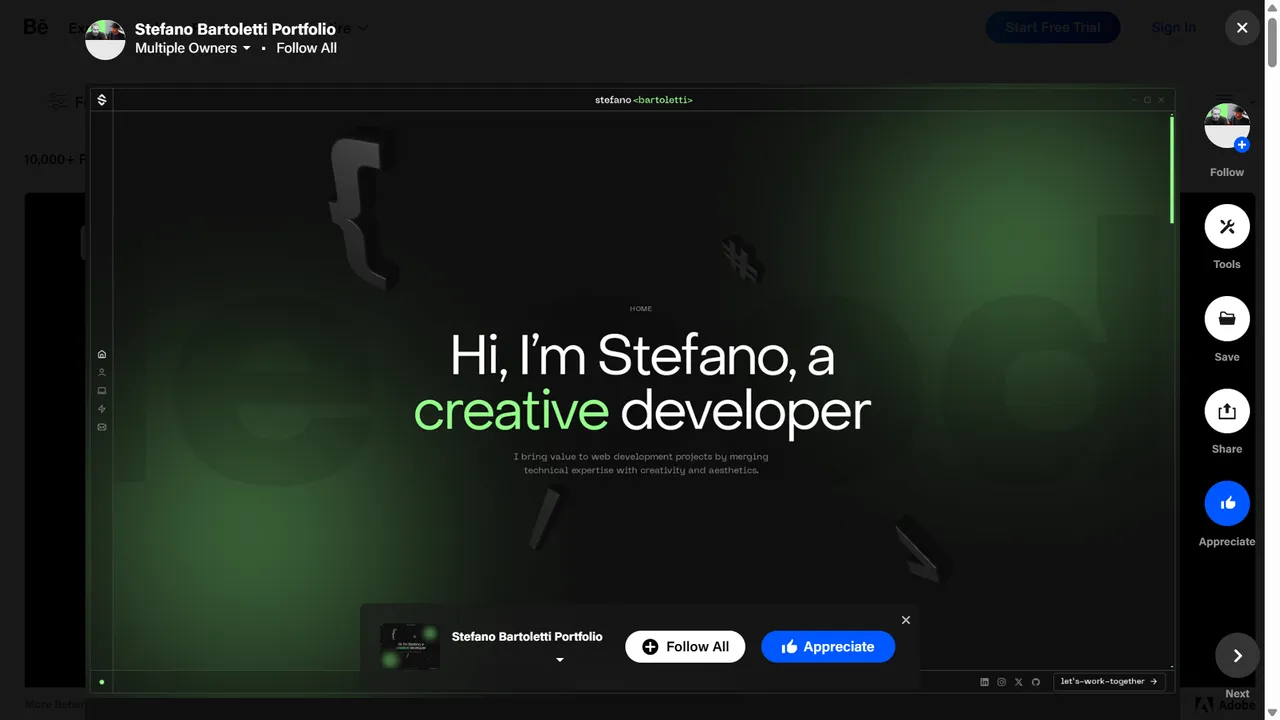
3. Case-Study Portfolio (Behance or Notion)
Credit:Stefano Bartoletti Behance Portfolio]
Not every frontend developer builds a personal site. Some use platforms like Behance or Notion to present case studies.
These portfolios usually highlight specific projects, explain the problem, outline their role, and describe the results. Instead of raw code, the focus is on business impact and storytelling.
Strengths
- Clear explanations that make sense to both technical and non-technical reviewers.
- Shows how the developer frames challenges, makes decisions, and measures success.
- Easy to scan for outcomes like “improved checkout conversion” or “faster load times,” which map directly to business value.
Hiring Takeaway
This format is strong for employers who want to see how a developer thinks about problems and aligns their work with business goals. It’s especially useful for startups that need developers who can communicate results beyond just writing code.
4. The Hybrid Portfolio
Some of the strongest portfolios combine multiple formats: a personal website for design and branding, GitHub links for code transparency, and short case studies that explain the results.
This “hybrid” approach gives you a complete view of the developer’s skills.
Strengths
- Offers the best of both worlds: polished design plus hard proof of coding ability.
- Case studies help connect technical work to measurable business outcomes.
- Easy to verify, you can click through live demos, scan the code, and read about the project’s impact.
Hiring Takeaway
This format makes evaluation faster and more reliable. If you see a hybrid portfolio that’s up to date, you’re likely looking at a candidate who takes ownership, values quality, and communicates effectively. It’s the closest thing to an “ideal” portfolio for employers.
5. The Template-Forward Portfolio
Some developers use pre-built templates for their portfolios. These often look polished on the surface, with clean layouts and modern visuals. Template-driven portfolios are common and appear frequently.
Strengths
- Shows that the developer can set up and customize an existing framework quickly.
- Indicates basic familiarity with tools, layouts, and styling.
- May still include links to real projects or repos, even if the portfolio itself isn’t original.
Hiring Takeaway
This format is easy to come across, and while it can look professional, you’ll need to dig deeper to confirm originality and real-world problem-solving skills. Use it as a starting point, not the final signal.
These five portfolio types cover most of what you’ll see when evaluating frontend talent. Each has its strengths but none tells the full story.
The next step is spotting the red flags that signal weak candidates. And if you’d rather skip the guesswork altogether, RocketDevs connects you with pre-vetted frontend developers, screened to Silicon Valley standards.
6 Red Flags That Signal Weak Candidates
Portfolios are helpful, but they can also mislead. Some look impressive on the surface but hide signs of inexperience or lack of real ability.
Here are the most common red flags employers should watch for when reviewing frontend developer portfolios.
1. Only Template-Based Work
If every project looks like it was built from a template with no real customization, the developer may lack originality or problem-solving skills. Templates are fine for structure, but good candidates should show how they made it their own.
2. No Live Project Links
Screenshots alone don’t prove much. A strong portfolio should include live demos or links to working products. Without them, you can’t tell whether the candidate can ship functional, user-ready work.
3. Missing Code or Repositories
The absence of any code samples or project links is a concern. Portfolios that don’t show the “behind the scenes” may signal that the developer either didn’t do the work themselves or can’t back up their claims.
4. Vague Role Descriptions
Look out for projects described in broad terms like “built this app” without explaining their role. Many projects are team efforts; if the candidate can’t clearly state what they contributed, you won’t know if they can deliver independently.
5. Outdated or Broken Links
A portfolio with broken demos or projects untouched for years is a red flag for reliability. Startups need developers who can ship fast and adapt, stale or abandoned work suggests the opposite.
6. Overly Flashy but No Substance
Some portfolios lean heavily on animations and visuals but show no real business impact or functionality. If it looks more like a design showcase than proof of real work, proceed with caution.
How to Use Portfolios in Your Hiring Funnel
A frontend portfolio isn’t just a showcase, it’s a tool you can use to make your hiring funnel more effective. Here’s how to get the most out of it at each stage.
1. Screening Applications
Start with portfolios before resumes. A quick scan tells you whether the candidate can design cleanly, ship real projects, and explain their work. This saves time by filtering out applicants who don’t meet your basic quality bar.
2. Shortlisting Candidates
Use portfolios to create a shortlist of candidates worth interviewing. Focus on those who show both technical skill (through working projects or repos) and business awareness (through case studies or outcomes).
3. Shaping Interview Questions
Portfolios give you ready-made material for interviews. Instead of asking generic questions, point to a project in the candidate’s portfolio and ask:
- “What problem were you solving?”
- “What was your role on the team?”
- “What trade-offs did you make?”
This reveals depth, clarity, and ownership.
4. Comparing Finalists
When you’re down to a few strong candidates, portfolios help you compare side by side. Who demonstrates creativity? Who shows measurable results? Who explains their process best? Portfolios bring clarity to your final decision.
5. Onboarding and Setting Expectations
Even after hiring, portfolios can guide onboarding. Reviewing past work with your new hire sets a baseline for design standards, coding practices, and delivery expectations.
Related:Top 100 Front-End Developer Interview Questions + Tips
Smarter Hiring Without Guesswork
Frontend portfolios are one of the fastest ways to see what a developer can really do.
They highlight creativity, problem-solving, and the ability to ship user-ready work, all qualities that matter when you’re building products under tight timelines.
But portfolios alone can’t guarantee a strong hire. The wrong developer still risks missed deadlines, mounting costs, and frustrated users.
That’s why more than 500 startups trust RocketDevs to take the guesswork out of hiring. Our developers are pre-vetted, starting from $8/hour, and backed by a 14-day risk-free trial.
Frequently Asked Questions
- Can non-technical founders evaluate portfolios effectively?
Yes, if you know what to look for. Focus on clear design, working projects, and simple explanations of outcomes like faster load times or smoother checkout flows. For a fuller walkthrough, see how to evaluate a developer without a technical background.
Ask candidates to walk you through a project in plain language during interviews. If they can explain the problem, approach, and result clearly, that’s a strong signal of competence.
- Should I pass on candidates who only show template-based work?
Not necessarily, but proceed carefully. Templates are common starting points, but they don’t prove originality or problem-solving.
If a portfolio looks entirely template-driven, ask the candidate to explain how they customized it and what problems they solved. Strong candidates will have at least one project that goes beyond copy-paste work.
- How can I confirm that a portfolio project is real?
Ask for links to live projects or code repositories. Even if you’re not technical, active links and updates show credibility.
In interviews, request a walkthrough: “What problem were you solving? What decisions did you make?” A real project owner will be able to answer confidently.
- How does RocketDevs ensure quality beyond portfolios?
RocketDevs vets every developer through a rigorous screening process that tests coding standards, problem-solving, and communication.
We back this with a 14-day risk-free trial, so you can confirm fit on real projects before committing.

Written by
Oluwapelumi Idowu
SEO Manager
When I'm not thinking about work, I play chess online or see historical movies.
More from our blog
Continue exploring insights and stories from RocketDevs